Most of this work
is already funded.
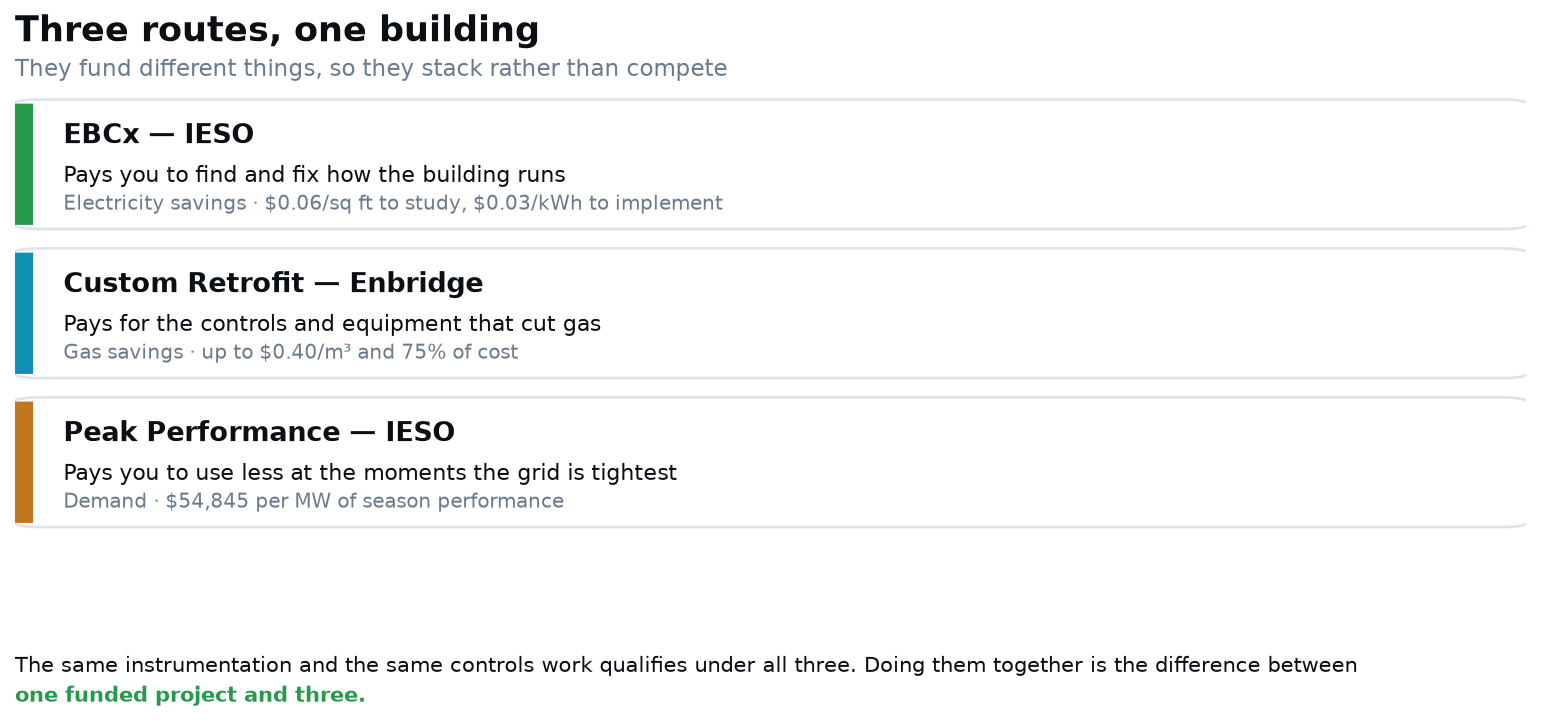
Three programmes pay for different parts of the same job: one to find out how your building actually runs, one for the controls and equipment that cut gas, and one for using less at the hours the grid is tightest. They stack. Sequenced properly, the difference is one funded project instead of three unfunded ones.
Existing Building
Commissioning
IESO Save on Energy
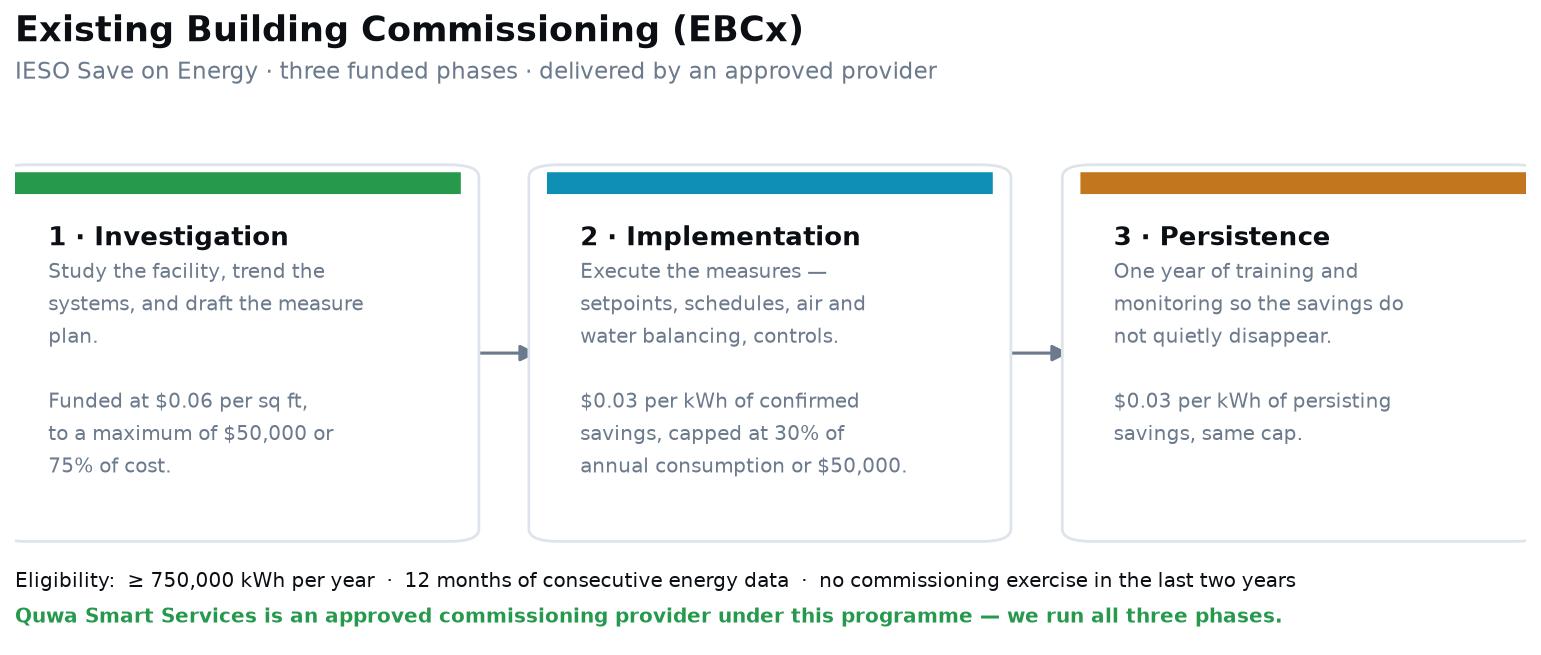
Quwa Smart Services is an approved commissioning provider under this programme, and we run all three phases — investigation, implementation and the persistence year that follows.
- Investigation — $0.06 per sq ft, to a maximum of $50,000 or 75% of cost
- Implementation — $0.03 per kWh of confirmed savings
- Persistence — $0.03 per kWh that is still there a year later
- Eligibility: 750,000 kWh a year or more, twelve months of consecutive data, and no commissioning exercise in the last two years
Commercial Custom
Retrofit
Enbridge Gas
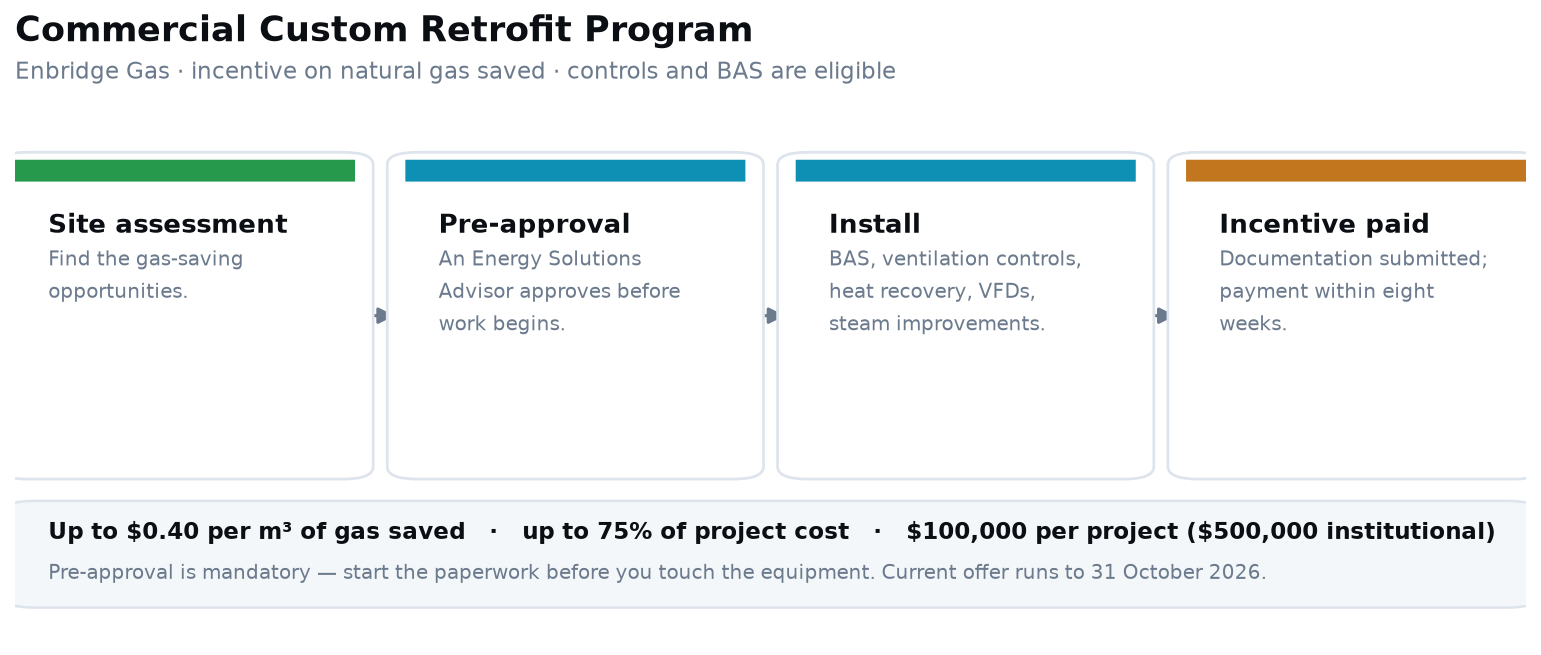
Pays on the natural gas a project saves. Building automation, ventilation controls, heat recovery, VFDs and steam improvements are all eligible — which means the controls upgrade that a commissioning study recommends can usually be funded here.
- Up to $0.40 per m³ of gas saved
- Up to 75% of project cost
- $100,000 per project, $500,000 for institutional
- Pre-approval is mandatory — the paperwork has to be done before anyone touches the equipment
The current offer runs to 31 October 2026. Projects need an Energy Solutions Advisor sign-off before work begins, so the practical deadline to start a conversation is earlier than the published one.
Peak
Performance
IESO Save on Energy · delivered through Q-Peak
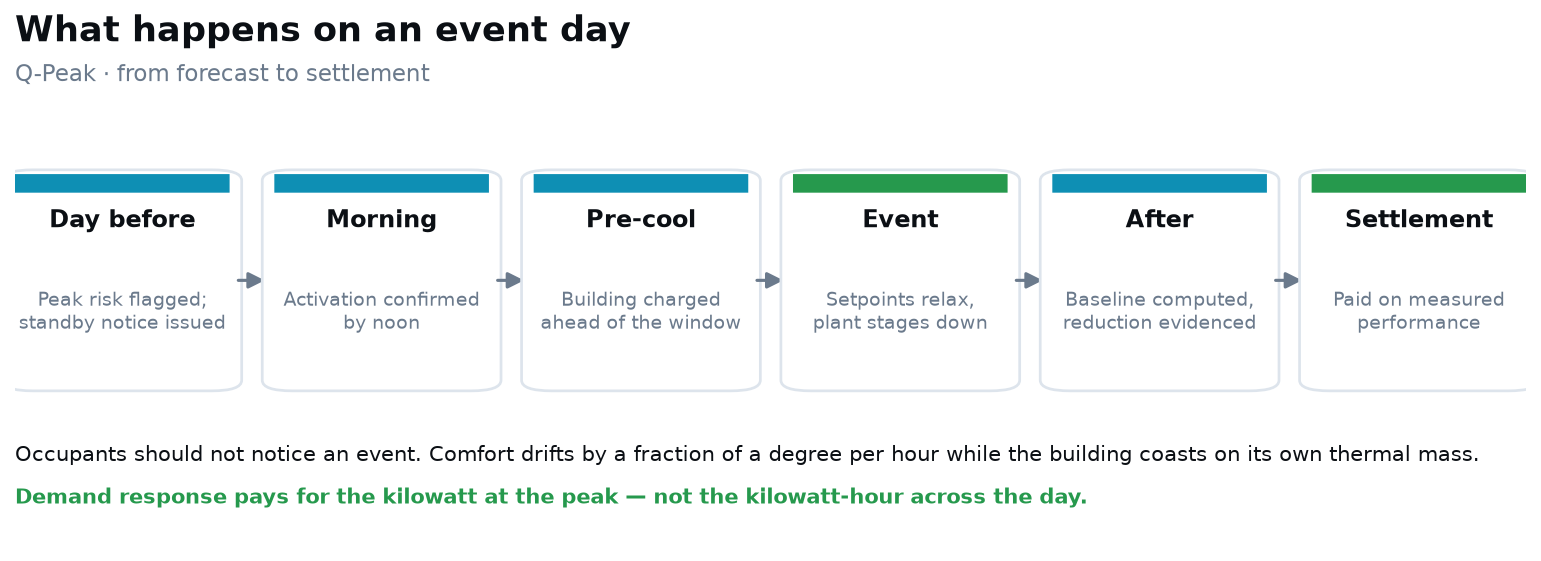
Demand response pays for the kilowatt at the peak, not the kilowatt-hour across the day. On roughly ten afternoons a year, a building that can shed load for three hours earns a season payment for doing it — and the same controls work that qualifies for the other two programmes is what makes the shed possible.
- $54,845 per MW of season performance, at the 2026 rate
- Settled on metered performance against an IESO baseline, not on enrolment estimates
- No capital required — this is a controls and dispatch exercise
Measured, not
estimated.
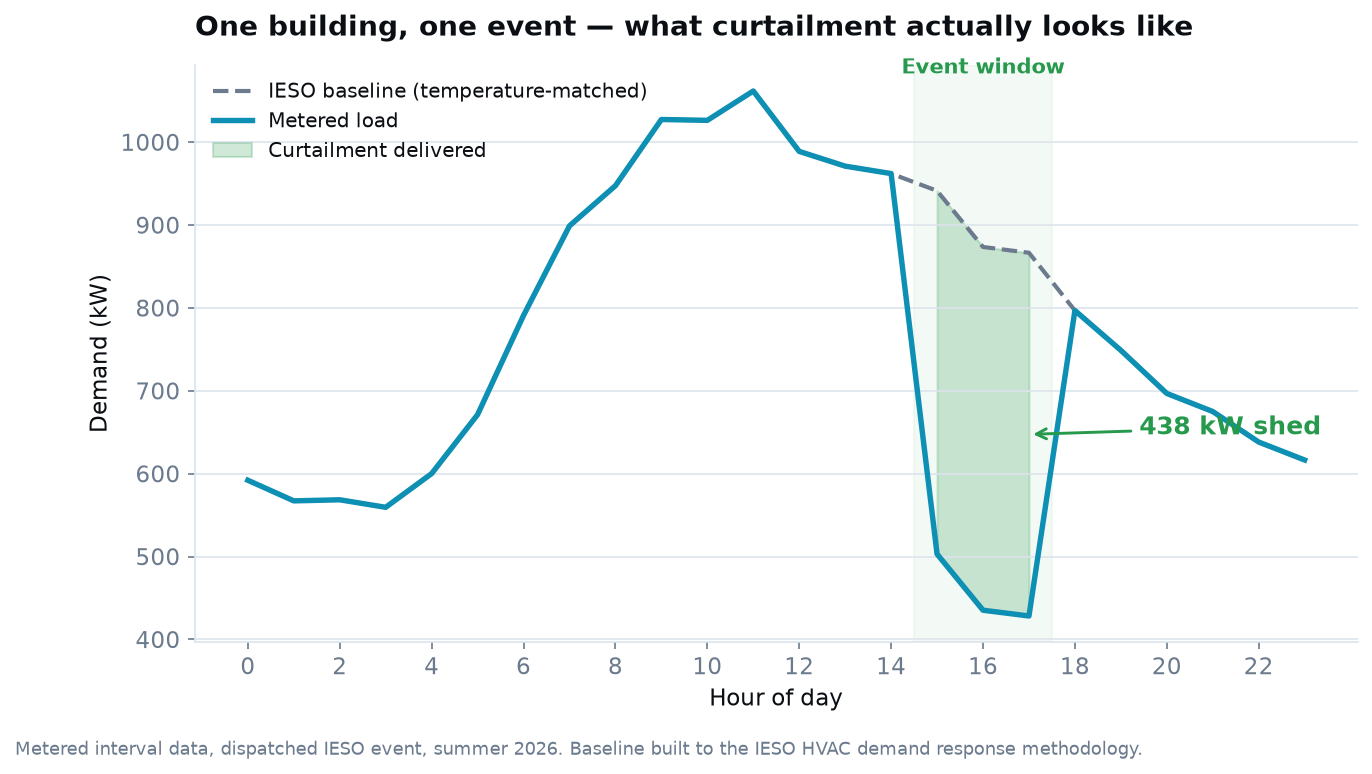
This is one building on one dispatched event last summer. The dashed line is the IESO baseline built from temperature-matched days; the solid line is what the meter recorded. The gap is 438 kW, held for three hours, and nobody in the building noticed.
Sequence the funding
before you scope
the work.
The order matters more than the paperwork. An investigation that is written knowing which incentive will fund the fix produces a very different measure list from one that is not. Send us twelve months of utility data and we will tell you which of the three you qualify for.